Sidewalk Architects: Los Angeles Street Vending Archive
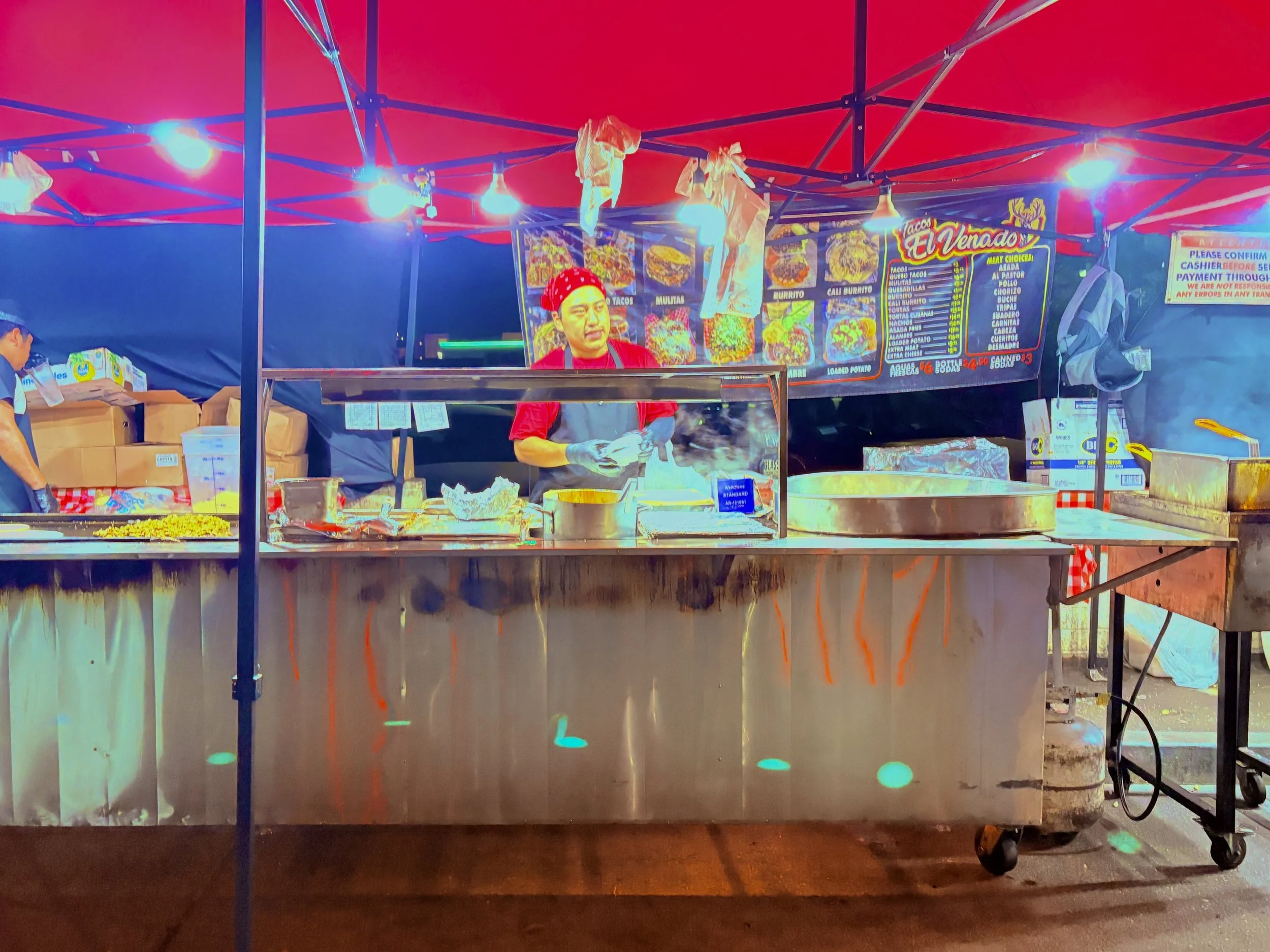
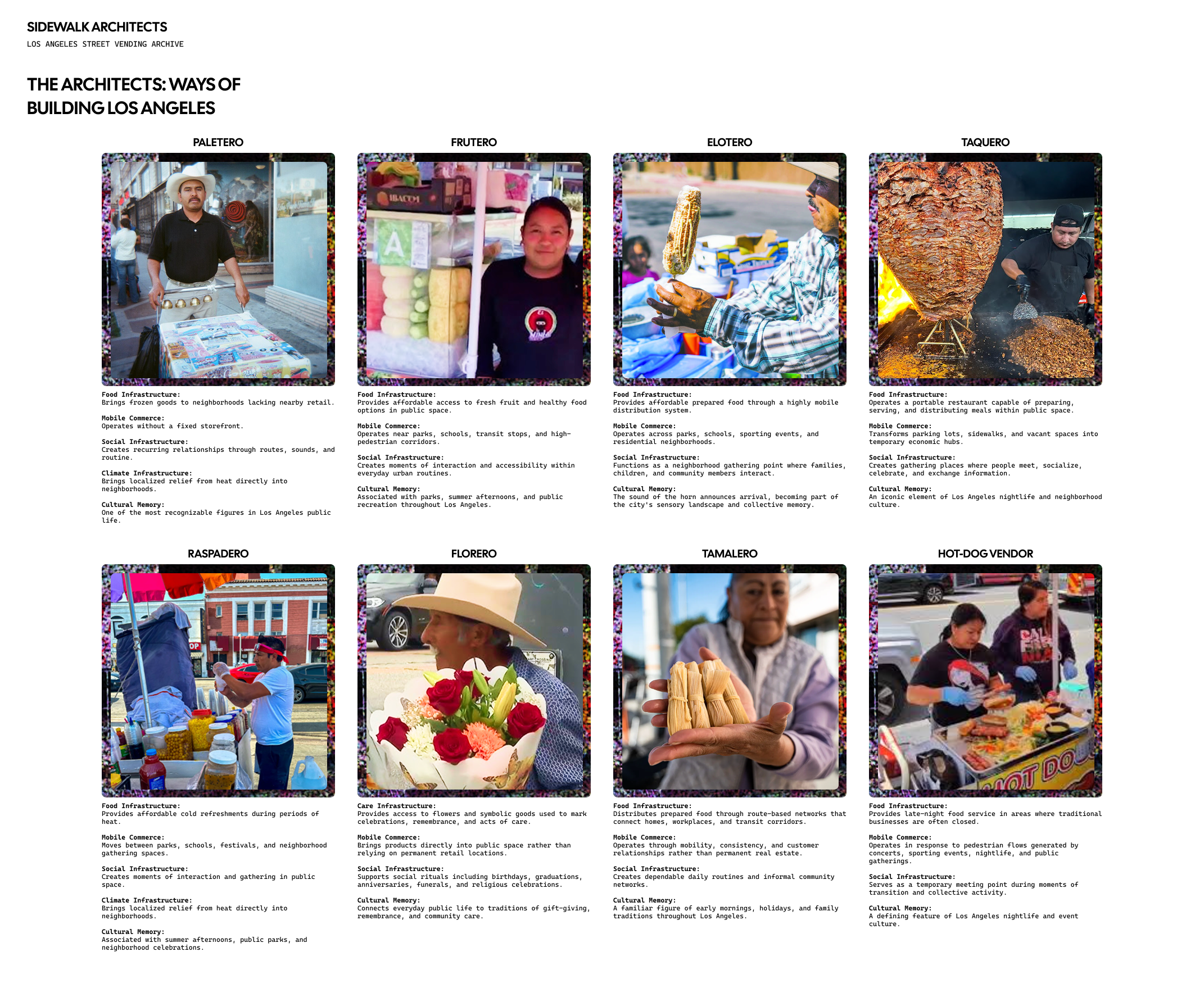
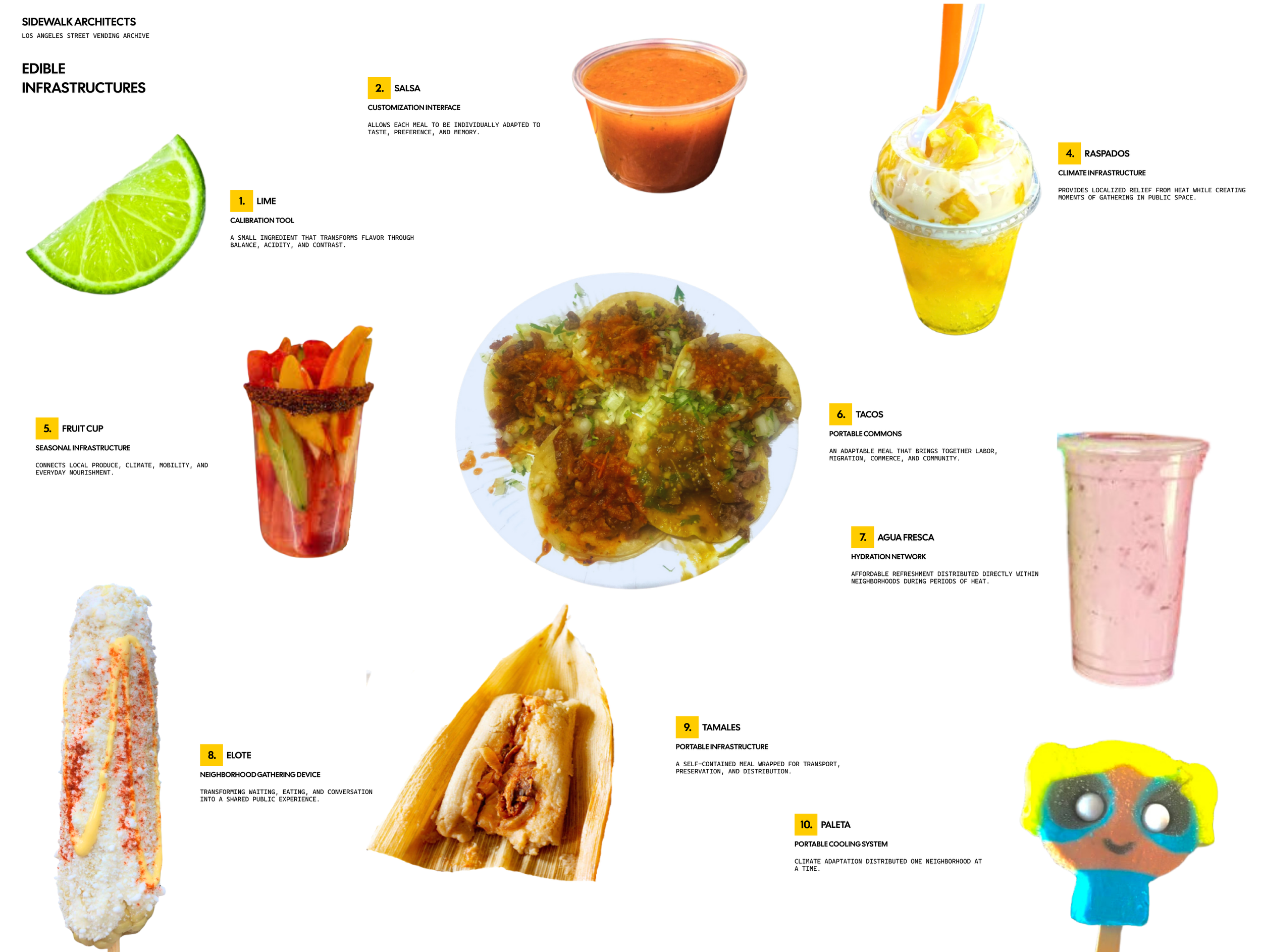
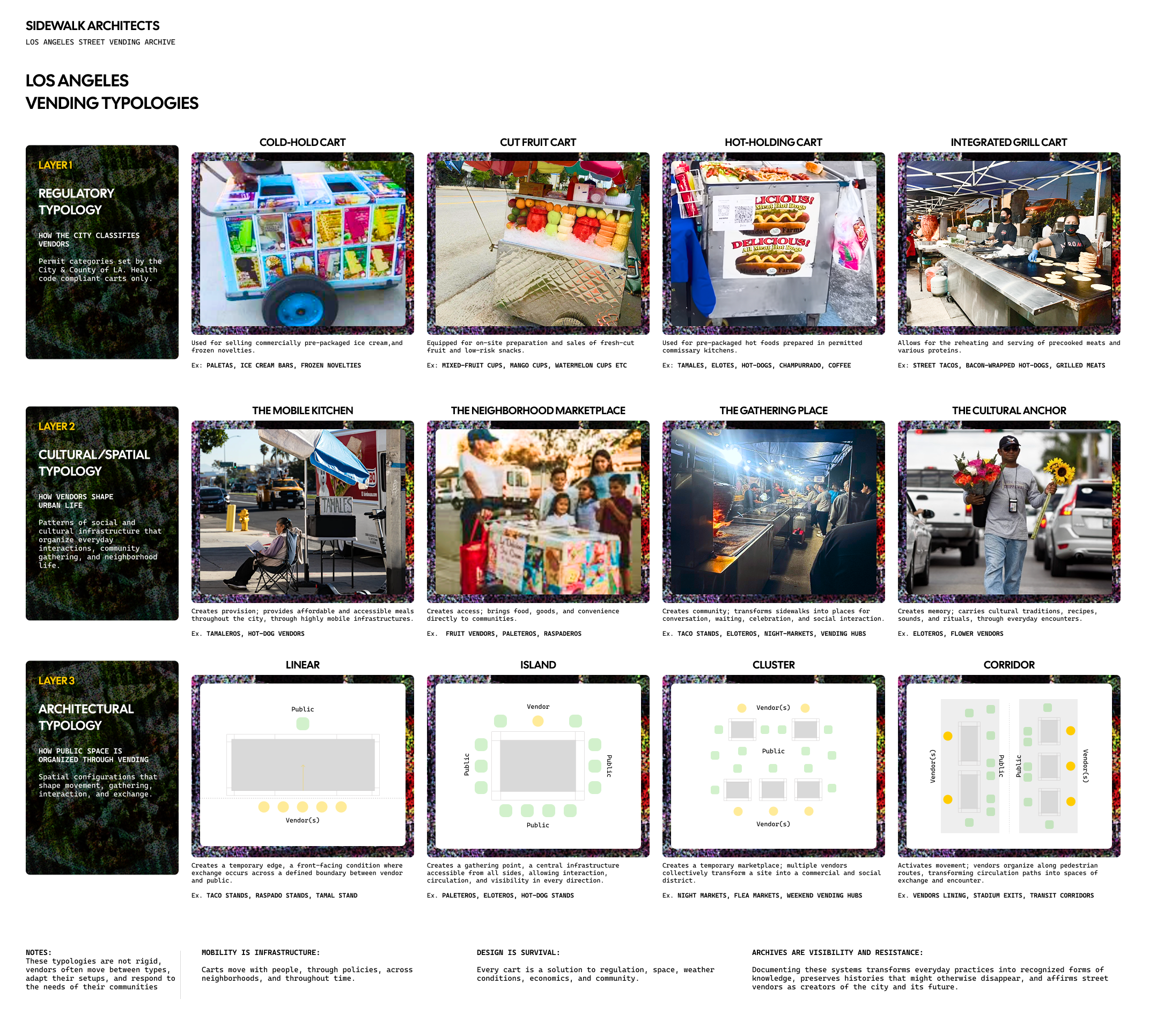
Sidewalk Architects: Los Angeles Street Vending Archive is an ongoing art, research, and documentation project examining how street vendors shape Los Angeles through systems of food distribution, public gathering, cultural memory, and everyday design. Focusing on taqueros, tamaleros, eloteros, paleteros, raspaderos, flower vendors, and other sidewalk entrepreneurs, the project explores street vending as a form of community-authored infrastructure and urban world-building.
Through photography, oral histories, archival research, mapping, field documentation, and visual analysis, the archive investigates the social, spatial, and material systems embedded within street vending. Rather than documenting vendors solely as small businesses, the project examines how they create temporary marketplaces, neighborhood gathering places, mobile food networks, cultural institutions, and forms of public life that have shaped Los Angeles for generations.
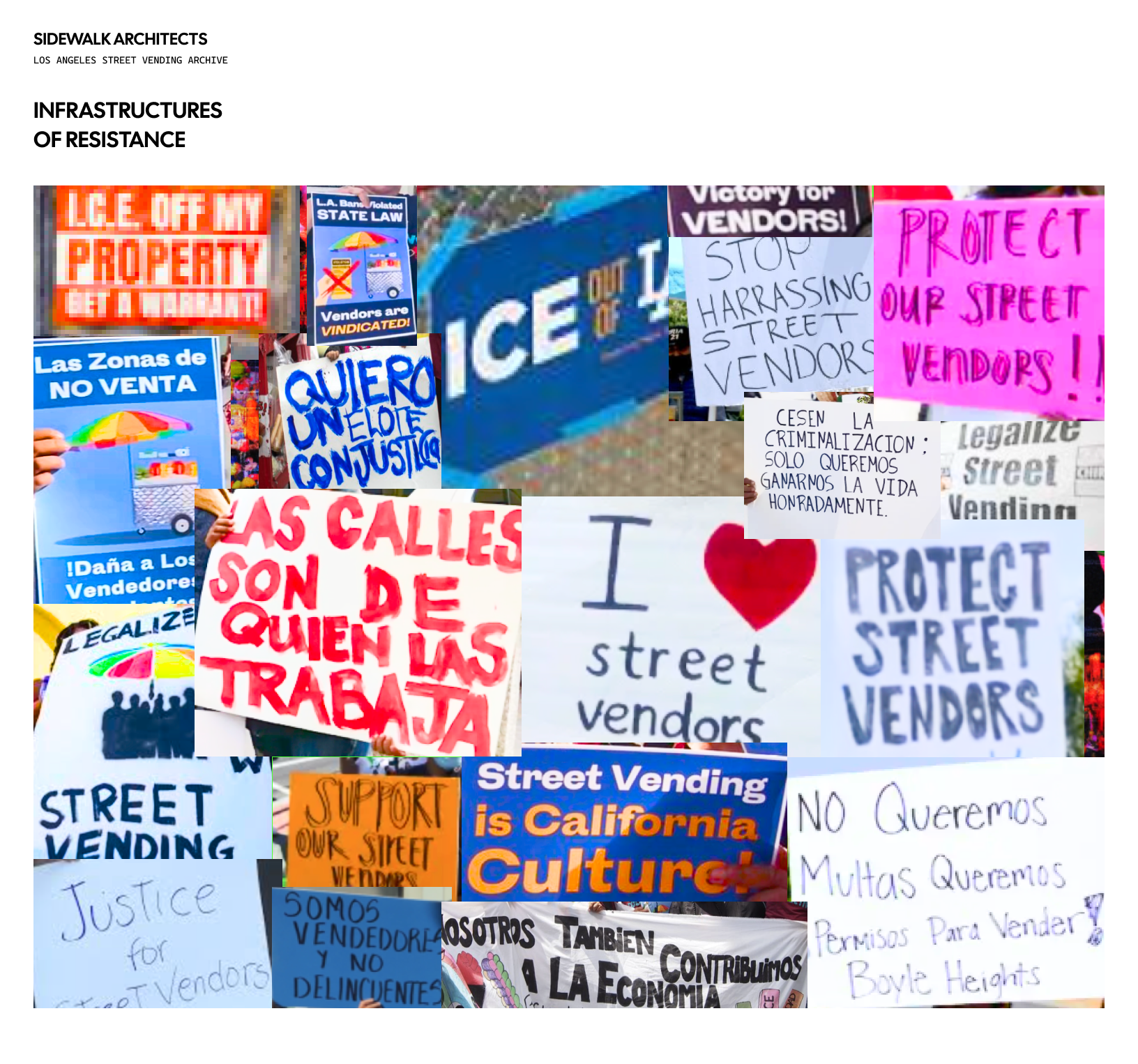
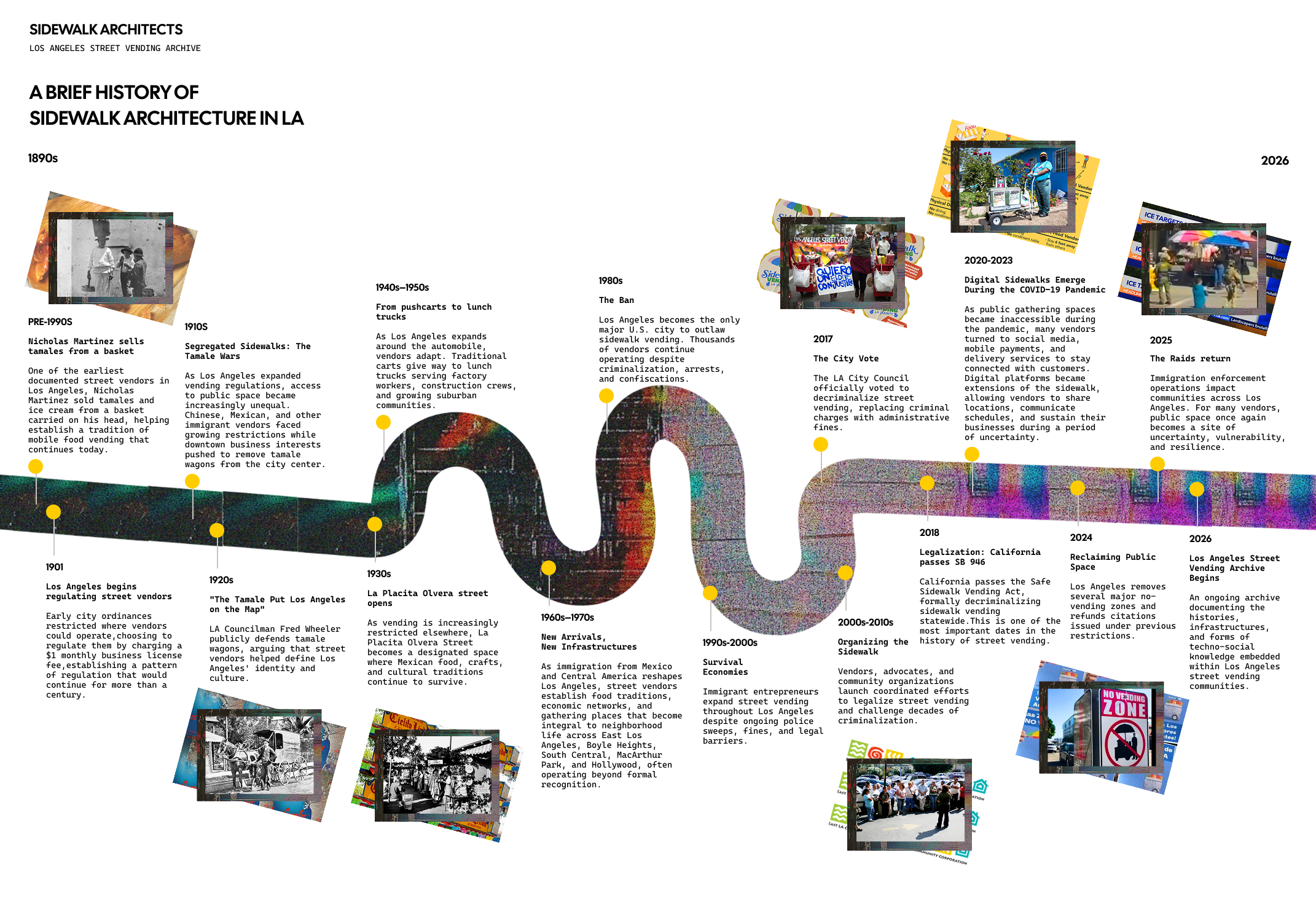
Organized through a series of interconnected studies—including a historical timeline of Los Angeles street vending, cultural and architectural typologies, edible infrastructures, vendor-built systems, and community-led movements for legalization and protection, the project seeks to document forms of knowledge, labor, creativity, and adaptation that are often overlooked despite their significance to the city's cultural landscape. The archive combines historical research, field documentation, visual analysis, and speculative archival practices to explore how communities create worlds through everyday acts of ingenuity.
Project Catalyst
Growing up in South Central Los Angeles, I watched my family and community build livelihoods through street vending. My stepfather operated a taco cart, my grandmother sold elotes throughout Los Angeles, and many of the people around me transformed sidewalks, parking lots, and street corners into gathering places that fed families and supported entire communities. These environments taught me to recognize creativity, ingenuity, and design in places where it is rarely acknowledged. Yet despite their contributions, the histories, knowledge, and infrastructures embedded within street vending communities are seldom preserved within traditional archives.
In 2026, after learning that a tamal vendor I regularly visited in my neighborhood had been detained during an immigration enforcement operation, I became increasingly aware of how fragile these histories can be. Someone whose presence had become part of the everyday fabric of the neighborhood suddenly disappeared. The event sharpened questions I had carried for years:
What happens when a community knowledge holder disappears?
What forms of history are lost when people are removed from public space?
Who preserves these stories?
Who is recognized as a creator of the city?
Sidewalk Architects emerged from these questions and from a desire to document the people, infrastructures, and systems of knowledge that continue to shape Los Angeles through everyday acts of world-building.
Future Development
• Oral history collection documenting vendor experiences, migration stories, and community knowledge
• Expanded county-wide documentation of street vending ecosystems across Los Angeles
• Archival research into pre- and post-decriminalization street vending policies, enforcement, and organizing efforts
• Cartographies of Care: mapping vendor networks, gathering places, and community infrastructures throughout the city
• Anatomy of a Taco Cart: an expanded study of vendor-built technologies, tools, and spatial adaptations
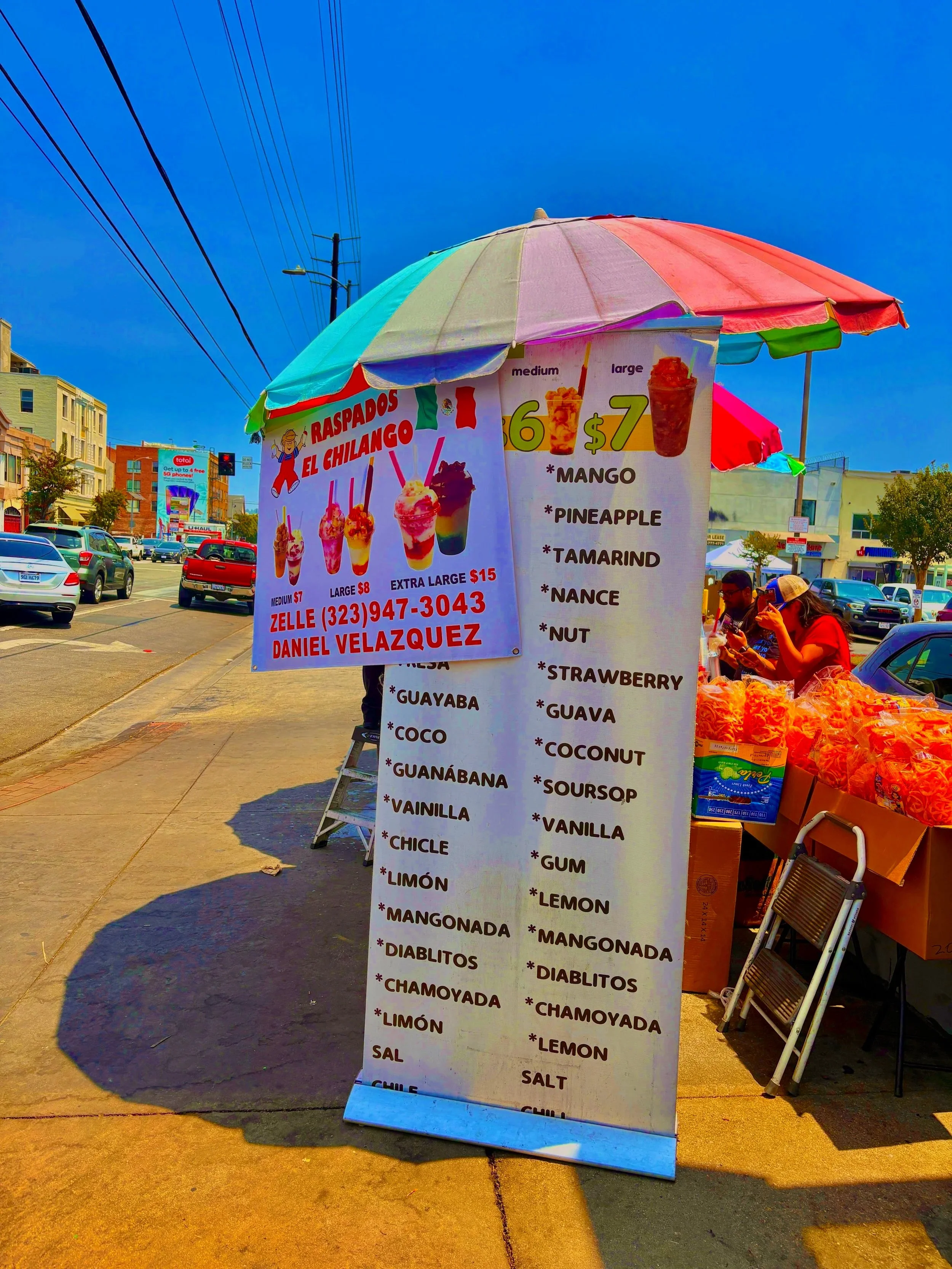
• Material Culture Archive documenting signage, menus, carts, tools, packaging, and everyday objects used throughout street vending communities
• Digital Sidewalks: research into how vendors use social media, mobile payments, and digital platforms to sustain businesses and maintain community connections
• Public-facing digital archive
• Exhibition, publication, and educational programming
Role: Artist, Designer, & Researcher
Status: Ongoing Art Research Project
Location: Los Angeles County
Year: 2025-Present